
👋🏼 Hi there, I'm Saurav!
👨🏻💻 I’m a 4th year PhD student in the Department of Computer Science at the University of North Carolina at Chapel Hill, fortunate to be advised by Dr. Harlin Lee.
🔬 Broadly, I’m interested in the applications of machine learning to tackle challenges in healthcare and improve patient care.
🎓 Prior to starting my PhD, I earned my BA summa cum laude from Kenyon College as a double major in Mathematics and Economics (honors) with a Scientific Computing concentration. There, I had the privilege of conducting coding theory research with Dr. Nuh Aydin, discovering new error-correcting codes with desirable properties and parameters.
🌟 In my free time, I love to play tennis, watch soccer, try out new dishes, and travel!
🤝 I’m always happy to chat about research, explore new internship opportunities, or just discuss life in general. Feel free to reach out!
Latest News
- [May 2026]: Joined HERE Technologies as a Machine Learning Research Engineer for a Summer 2026 internship.
- [May 2026]: Received ICML 2026 Gold Reviewer recognition, awarded to the top 25% of reviewers.
- [Nov 2025]: Received a $30,000 UNC AI Acceleration Microsoft Azure Cloud Resource Grant.
- [Jun 2025]: Awarded $1,000 in Google Cloud Research Credits.
- [May 2025]: Joined the Laboratory for Analytic Sciences (LAS) for an Applied Data Science internship for Summer 2025.
- [Oct 2024]: Gave a research talk at UNC CompMed's Research in Progress program.
- [Sep 2024]: My first-author paper was accepted at IEEE-EMBS BHI 2024.
- [May 2024]: Joined Cerbrec Inc. as a Deep Learning intern for Summer 2024.
- [Nov 2023]: Earned 3rd place at Data Science Week 2023 at Purdue University Fort Wayne.
- [Aug 2023]: Started my PhD at UNC Chapel Hill.
Research
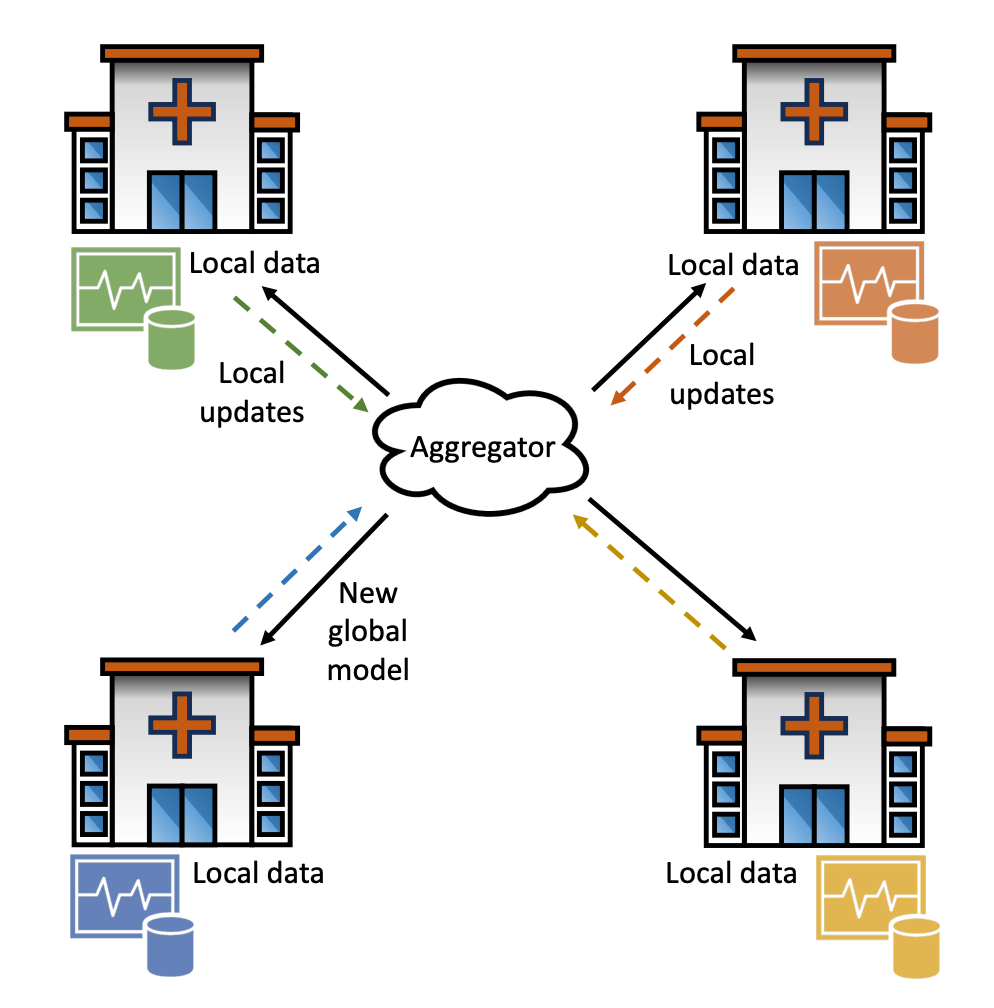 | . In Preparation for Submission Developing accurate and generalizable epileptic seizure prediction models from electroencephalography (EEG) data across multiple clinical sites remains challenging due to strict patient-privacy regulations and substantial data heterogeneity, including non-IID differences. Federated Learning (FL) provides a privacy-preserving framework for collaborative model training, but standard aggregation methods such as Federated Averaging (FedAvg) are vulnerable to dominance by large or skewed datasets in heterogeneous environments. In this work, we investigate FL for seizure prediction using a single EEG channel across four diverse public datasets: Siena, CHB-MIT, Helsinki, and NCH. These datasets represent adult, pediatric, and neonatal patient populations with varying recording conditions. We implement privacy-preserving global normalization and introduce a Random Subset Aggregation strategy, in which each client trains on a fixed-size random subset of its data per round, ensuring equal and fair contribution during aggregation. Our experiments show that locally trained models fail to generalize across sites, and conventional weighted FedAvg produces highly imbalanced performance, including 89.0% accuracy on CHB-MIT but only 50.8% on Helsinki and 50.6% on NCH. In contrast, Random Subset Aggregation substantially improves performance on under-represented clients, raising accuracy to 81.7% on Helsinki and 68.7% on NCH. It achieves a macro-average accuracy of 77.1% and a pooled accuracy of 80.0% across all sites. These results demonstrate that balanced aggregation approaches can produce more robust, equitable, and generalizable FL seizure prediction models in real-world, heterogeneous multi-hospital environments while maintaining data privacy. |
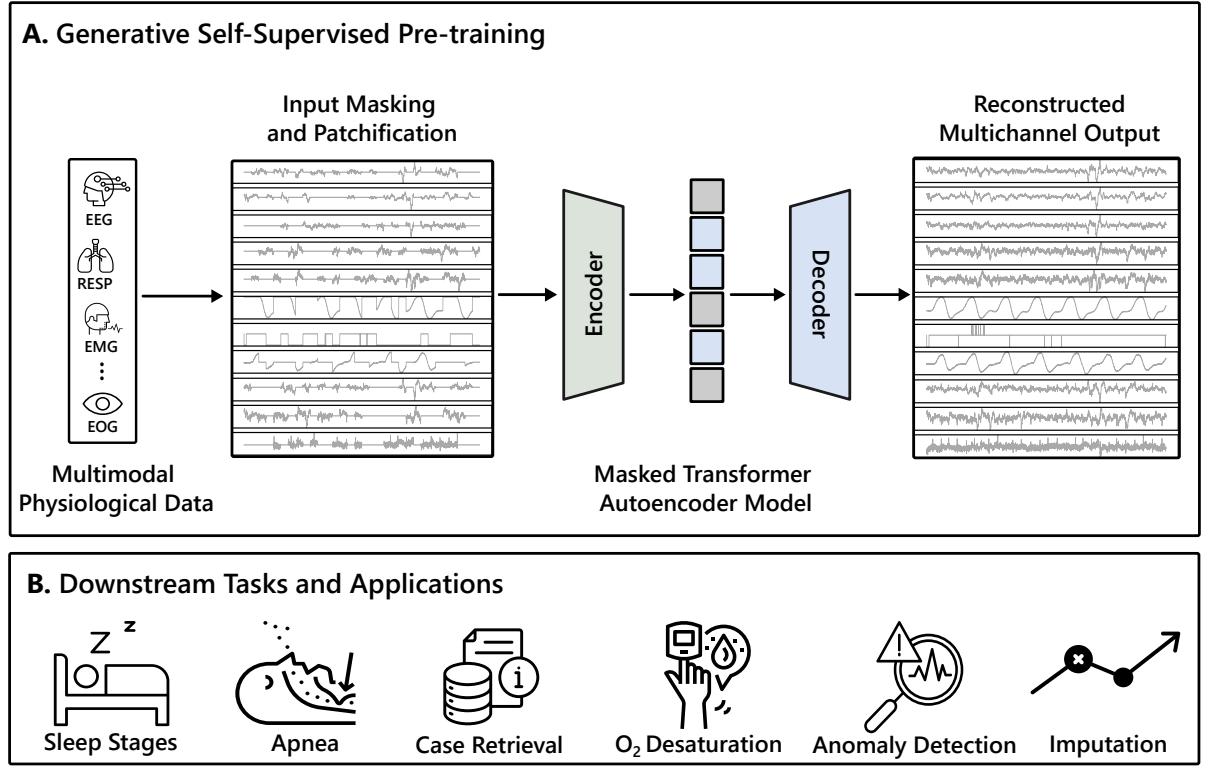 | . IEEE-EMBS International Conference on Biomedical and Health Informatics (BHI’24) Pediatric sleep is an important but often overlooked area in health informatics. We present PedSleepMAE, a generative model that fully leverages multimodal pediatric sleep signals including multichannel EEGs, respiratory signals, EOGs, and EMG. This masked autoencoder-based model performs comparably to supervised learning models in sleep scoring and in the detection of apnea, hypopnea, EEG arousal, and oxygen desaturation. Its embeddings are also shown to capture subtle differences in sleep signals coming from a rare genetic disorder. Furthermore, PedSleepMAE generates realistic signals that can be used for sleep segment retrieval, outlier detection, and missing channel imputation. This is the first general-purpose generative model trained on multiple types of pediatric sleep signals. |
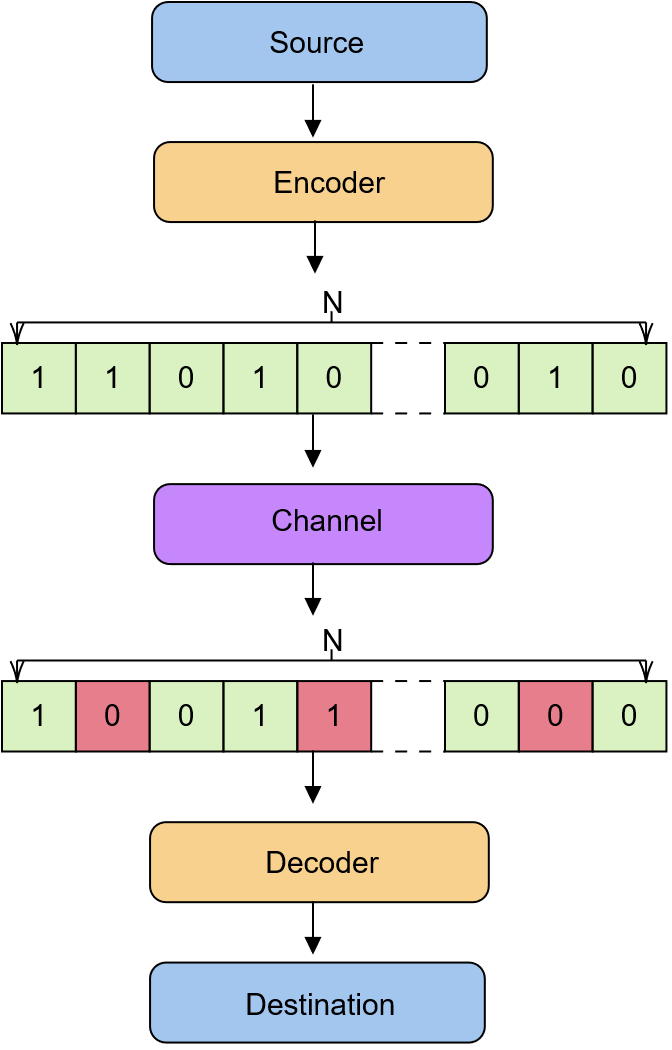 | . 2022 IEEE International Symposium on Information Theory (ISIT) One of the central problems in coding theory is to construct codes with the best possible parameters and properties. A special class of codes called quasi-twisted (QT) codes is well known to produce codes with good parameters. Most of the work on QT codes has focused on the 1-generator case. In this work, we focus on 2-generator QT codes and generalize the ASR algorithm, which has been effective in producing new linear codes from 1-generator QT codes. As a result of implementing the generalized algorithm, we found 103 2-generator QT codes that are new among the class of QT codes. Many of these codes have the same parameters as the best-known linear codes and possess additional desirable properties, such as being LCD and dual-containing. We also found a binary 2-generator QT code that is record breaking among binary linear codes, and its extension yields another record-breaking binary linear code. |
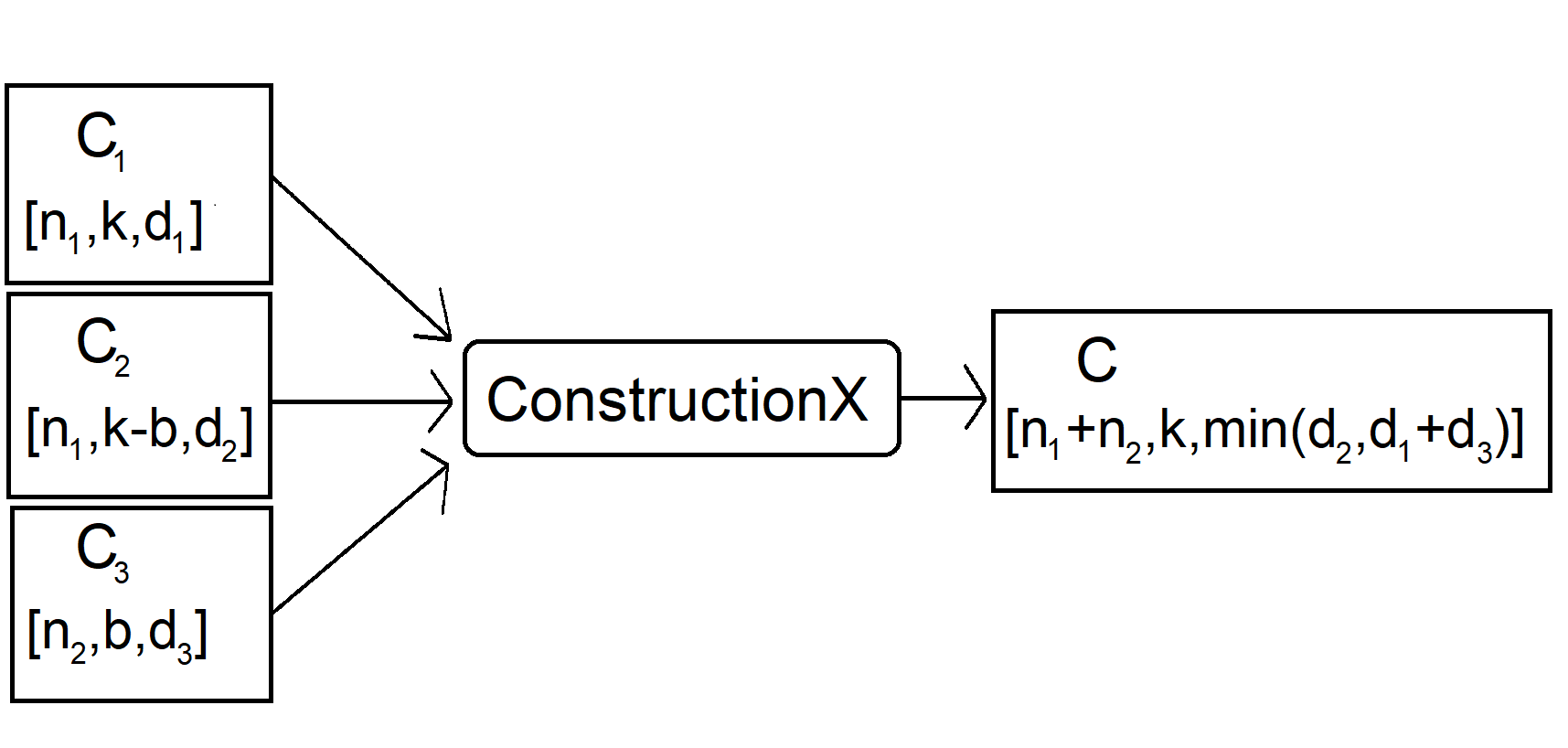 | . Computational and Applied Mathematics (2023) One of the most important and challenging problems in coding theory is to construct codes with the best possible parameters and properties. The class of quasi-cyclic (QC) codes is known to be fertile for producing such codes. Focusing on QC codes over the binary field, we found 113 binary QC codes that are new among the class of QC codes using an implementation of a fast cyclic partitioning algorithm and the highly effective ASR algorithm. These codes have the same parameters as the best-known linear codes, and many possess additional desirable properties such as being reversible, LCD, self-orthogonal, or dual-containing. Additionally, we present an algorithm for generating new codes from QC codes using Construction X and introduce 33 new record-breaking linear codes over GF(2), GF(3), and GF(5) produced using this method. |
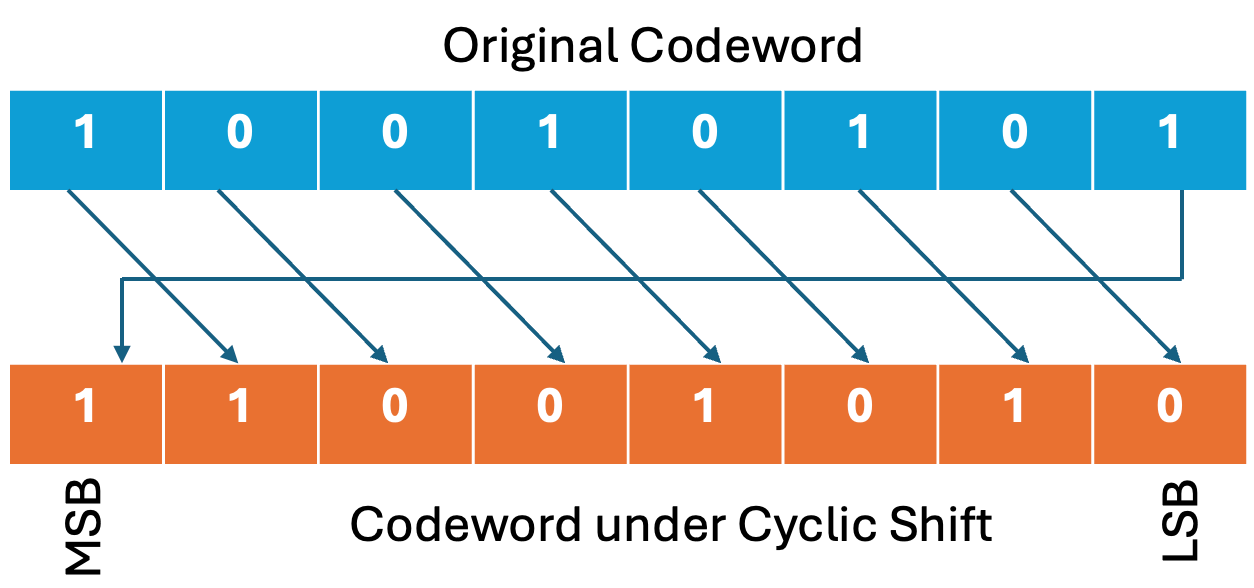 | . Designs, Codes and Cryptography (2023) Recently, a new algorithm for testing the equivalence of two cyclic codes was introduced. The algorithm is efficient and has produced useful results. In this work, we generalize this algorithm to constacyclic codes. As an application of the algorithm, we found many constacyclic codes with good parameters and properties. In particular, we found 22 new codes that improve the minimum distances of the best-known linear codes. |
Selected Honors and Awards
- ICML 2026 Gold Reviewer (2026)
- UNC AI Acceleration Microsoft Azure Cloud Resource Grant ($30,000) (2025)
- Google Cloud Research Credits ($1,000) (2025)
- IEEE BHI’24 NSF Student Travel Award (2024)
- 3rd Place: Posters and Short Talk, Data Science Week, Purdue University Fort Wayne (2023)
- Phi Beta Kappa Academic Honor Society (2022-present)
- Sigma Xi Scientific Research Honor Society (2023)
- Kenyon College Merit List, 8 times (2019-2023)
- 2nd Place: Kenyon Programming Contest (2022)
- 1st Place: Kenyon Programming Contest (2021)
Service
Peer Review
Served as a peer reviewer for:
- International Conference on Machine Learning (ICML) — 2026
- Conference on Neural Information Processing Systems (NeurIPS) — 2025, 2026
- Learning on Graphs Conference (LoG) — 2025
- IEEE International Workshop on Computational Advances in Multi-Sensor Adaptive Processing (CAMSAP) — 2025
- NeurIPS Time Series in the Age of Large Models Workshop (TS4H) — 2025